
Cavan Gonzales
San Ildefonso
Cavan Gonzales was born in 1970 to Barbara Gonzales and Robert Gonzales of San Ildefonso Pueblo. He grew up watching and working with his mother as she made pottery. He excelled at it but rather than continue in her black-on-black-with-sgraffito style, he mostly makes polychrome pieces.
Cavan won his first ribbon at the 1983 Santa Fe Indian Market. It was a Third Place ribbon in the children, ages 13-18 division. The next year he won two First Place ribbons and a Second Place ribbon in the same division. When he was 16, Cavan designed the 75th Anniversary official emblem commemorating New Mexico's statehood. At the age of 18 Cavan was awarded the Presidential Scholar Award from the White House in Washington DC.
Cavan kept winning ribbons every year through his participation in the Santa Fe Indian Market but he also earned a full, four-year scholarship and earned his BFA in ceramics, glaze calculations and intaglio at Alfred University.
Cavan's work can be seen in places like the Smithsonian's Museum of the American Indian, the Millicent Rogers Museum, the Wheelwright Museum of the American Indian, the Heard Museum and the Museum of Indian Arts and Culture.
Some Exhibits that featured Cavan's work
- Something Old, Something New, Nothing Borrowed: New Acquisitions from the Heard Museum Collection. Heard Museum. Phoenix, Arizona. April 2, 2011 - March 18, 2012
- Gifts from the Community. Heard Museum West. Surprise, AZ. April 12, 2008 - October 12, 2008
- Home: Native People in the Southwest. Heard Museum. Phoenix, AZ. 2005
- A Revolution in the Making: The Pottery of Maria and Julian Martinez. Heard Museum. Phoenix, AZ. May 10, 2003 - September 14, 2003
- More Than Art. Heard Museum. Phoenix, AZ. March 1999 - October 2004
- Recent Acquisitions. Heard Museum. Phoenix, AZ. July 12, 1997 - January 1998
Some of the Awards Cavan has Won
- 2005 Southwestern Association for Indian Arts. Fellowship Award
- 2004 Santa Fe Indian Market, Classification II - Pottery, Division D - Traditional pottery, painted designs on burnished black or red surface, Category 1102 - Bowls: Second Place
- 2004 Santa Fe Indian Market, Classification II - Pottery, Division E - Traditional pottery, jars, including wedding jars, Category 1206 - Jars, other Pueblos or tribes: Second Place
- 2000 Santa Fe Indian Market, Classification II - Pottery, Division E - Traditional pottery, jars, painted designs on matte or semi-matte surface, Category 1209 - Jars, other Pueblos or tribes: First Place
- 1997 Santa Fe Indian Market, Classification II - Pottery, Division E - Traditional pottery, jars, painted designs on matte or semi-matte surface, Category 1209 - Jars, other Pueblos or tribes: Second Place
- 1996 Santa Fe Indian Market, Classification II - Pottery, Division F - Traditional pottery, painted designs on matte or semi-matte surface, all forms except jars, Category 1306 - Other vases: Second Place
- 1996 Santa Fe Indian Market, Classification II - Pottery, Division F - Traditional pottery, painted designs on matte or semi-matte surface, all forms except jars, Category 1308 - Plates: Second Place
- 1995 Santa Fe Indian Market, Classification II - Pottery, Division G - Traditional pottery, painted designs on matte or semi-matte surface, all forms but jars, Category 1408 - Plates: Third Place
- 1994 Santa Fe Indian Market, Classification II - Pottery, Division E - Traditional pottery, painted designs on burnished black or red surface: Best of Division</li.
- 1994 Santa Fe Indian Market, Classification II - Pottery, Division E - Traditional pottery, painted designs on burnished black or red surface, Category 1201 - Jars: First Place
- 1992 Santa Fe Indian Market, Classification II - Pottery, Division F - Traditional pottery, painted designs on matte or semi-matte surface, Category 1305 - Jars, other pueblos: Second Place
- 1992 Santa Fe Indian Market, Classification III - Paintings, drawings and graphics, Division E - Graphics, Category 2201 - Etchings: First Place
- 1990 Santa Fe Indian Market, Classification II - Pottery, Division J - Non-traditional, any forms using non-traditional materials or techniques, Category 1401 - Stoneware, slabware, etc.: First Place
- 1990 Santa Fe Indian Market, Classification III - Paintings, drawings and graphics, Division D - Graphics: Best of Division
- 1990 Santa Fe Indian Market, Classification III - Paintings, drawings and graphics, Division D - Graphics, Category 1901 - Etchings: Third Place
- 1990 Santa Fe Indian Market, Classification III - Paintings, drawings and graphics, Division D - Graphics, Category 1903 - Woodcuts: First Place
- 1983 Santa Fe Indian Market, Classification VI - Student (18 years and under), Division A - Ages 13 through 18: Third Place
100 West San Francisco Street, Santa Fe, New Mexico 87501
(505) 986-1234 - www.andreafisherpottery.com - All Rights Reserved

San Ildefonso Pueblo
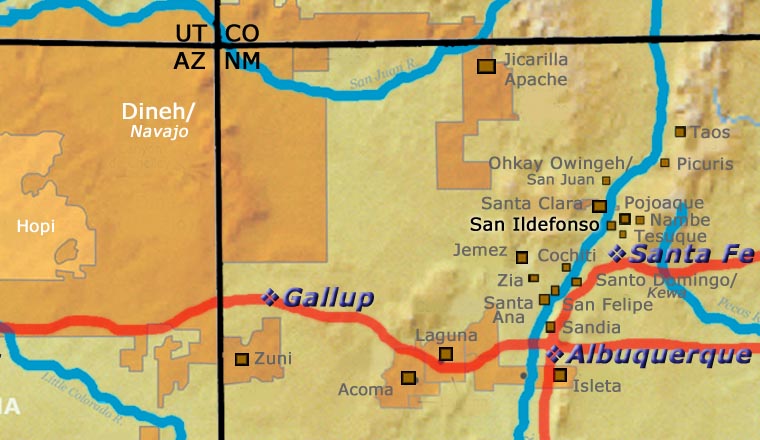
San Ildefonso Pueblo is located about twenty miles northwest of Santa Fe, New Mexico, west of Pojoaque, south of Santa Clara and straddling the Rio Grande. Although their ancestry has been traced to prehistoric pueblos in the Greater Mesa Verde area, the prehistoric pueblo at Tsankawi, in a non-contiguous parcel of Bandelier National Monument, is their most recent ancestral home. Tsankawi abuts the reservation on its northwest side.
Franciscan monks named the village after San Ildefonso and in 1617, forced the tribe to build a mission church on top of the village's main kiva. Before that the village was known as Powhoge, "where the water cuts through" (in Tewa). Today's pueblo was established as long ago as the 1300s. When the Spanish arrived in 1540, they estimated the village population at about 2,000.
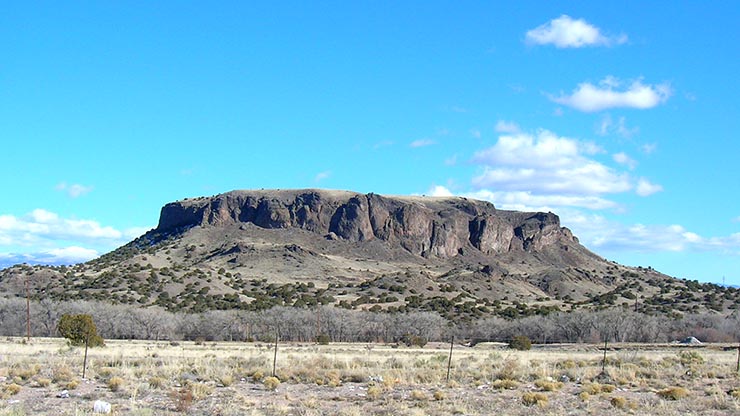
That mission was destroyed during the Pueblo Revolt of 1680 and when Don Diego de Vargas returned to reclaim San Ildefonso in 1694, he found virtually all the Tewa people camped out on top of nearby Black Mesa. After an extended siege the two sides negotiated a treaty and the people returned to their villages. However, the next 250 years were not so good for them.
The swine flu pandemic of 1918 reduced the pueblo's population to about 90. Their population has grown to more than 600 since but the only economic activity available on the pueblo itself involves creating art in one form or another. The only other work is off-pueblo. San Ildefonso's population is small compared to neighboring Santa Clara Pueblo, but the pueblo maintains its own religious traditions and ceremonial feast days.
San Ildefonso is most known for being the home of the most famous Pueblo Indian potter, Maria Martinez. Many other excellent potters from this pueblo have produced quality pottery, too, among them: Blue Corn, Tonita and Juan Roybal, Dora Tse Pe and Rose Gonzales. Of course, the descendants of Maria Martinez are still important pillars of San Ildefonso's pottery tradition. Maria's influence reached far and wide, so far and wide that even Juan Quezada of the Mata Ortiz pottery renaissance in Chihuahua, Mexico, came to San Ildefonso to learn from her.
100 West San Francisco Street, Santa Fe, New Mexico 87501
(505) 986-1234 - www.andreafisherpottery.com - All Rights Reserved